Author Archive

Demystifying Executive Search

Thursday, June 5th, 2025

A Bishop Perspective on Getting It Right

Appointing a new executive or director isn’t just about filling a gap. It’s about shaping the future of your organisation. At Bishop, we know that every leadership hire carries weight – and the ripples can be felt for years. That’s why we take executive recruitment seriously (but never soullessly). It’s a careful, collaborative, human-centred process and the risks aren’t always about getting it wrong, so much as thinking you’ve got it right…!

Let’s take you behind the scenes of how executive recruitment works, what to expect and why partnering with the right search firm can make all the difference.


What is Executive Recruitment?

‘Executive Recruitment’ – also known as ‘Executive Search’ – is the process of identifying, attracting and appointing senior leaders: CEOs, CFOs, General Managers, Board Directors and other senior team members tasked with moving an organisation forward.

It’s not about CVs on file. It’s about curiosity, chemistry and culture.

The aim? To find someone who doesn’t just fit the brief, but lifts the business by their presence.

Most executive hires don’t fail because of capability. They fail because the brief was wrong – or because the wrong things were prioritised.

We often see organisations:

  • hiring for experience rather than future need
  • confusing likeability with leadership
  • overlooking motivational misalignment

Capability gets people hired. Motivational and values fit determines whether they stay and succeed and when you’re dealing with strategic roles, that distinction really matters.

The steps in a recruitment process aren’t complicated but the quality of how each step is handled is critical.


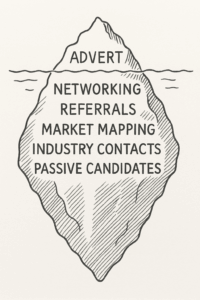
Not just about advertising.

The Process (Spoiler: It’s Not Just Advertising and Hoping For The Best)

Great executive search is part science, part art, and part good old-fashioned listening. Here’s how we break it down:


1. Clarifying the Need

We start by understanding why the role exists. What’s going on in your organisation? What’s changing? Who will this leader be working alongside and how do they need to show up? Many hiring mistakes happen before the role even gets to market – taking the time to really understand the need is essential.

A good executive search firm works with their clients to clarify the strategic context, shape the role and co-design a compelling story to take to market. There should never be a cookie-cutter approach to recruitment. Each brief is unique because each organisation, each role and each culture is.

Good exec recruiters also help with:

  • Position descriptions and candidate briefing documents

  • Remuneration benchmarking

  • Role scope and expectations

  • Deciding who needs to be involved (and when)

2. Search Strategy and Market Mapping

We go beyond the job ad. In fact, we often don’t rely on it at all.

We tap into networks, approach passive candidates and use targeted messaging that speaks to what actually motivates senior leaders. Behind the scenes, research and market mapping ensure we’re not just finding available candidates – but rather identifying the right ones.

Sometimes the best people aren’t the loudest and we know how to find them anyway.


3. Candidate Care and Screening

Senior leaders aren’t just applying for jobs, they’re considering major life decisions. We treat them with the respect and care they deserve, first identifying target candidates through research and market intelligence.

We hold early exploratory conversations to understand who they are, what drives them, motivational fit, values and whether they’re genuinely aligned with the role. We look for depth, not polish. And we keep you informed throughout so you’re not left guessing. Capability gets people hired but motivational and values fit determines whether they stay and succeed.


4. Interviews That Go Beyond the CV

Identifying people for the shortlist we present to our clients is only the start. From there we can help structure interviews that reflect the real demands of the role – reducing bias and focusing on what actually matters.

This often includes:

  • leadership and behavioural interviews
  • emotional intelligence and psychometric assessments
  • work style and motivation insights
  • structured reference frameworks

The goal is a 360° view – not just what someone has done, but how they think and what they’ll bring. Importantly, we’ll also highlight risks as well as strengths. This isn’t about selling candidates. It’s about helping you make a sound and well-balanced decision.


5. Decision Support and Offer Stage

This part can be tricky. People are weighing options, considering counter-offers and trying to picture themselves in your culture. We act as a sounding board, confidante, guide and mediator, helping both sides navigate the offer stage with honesty, clarity and integrity.

We’ll also help test motivational fit, what the candidate wants from their next chapter and how that might align with your strategic needs. Let’s face it, this is one of the highest-leverage leadership decisions you’ll make.
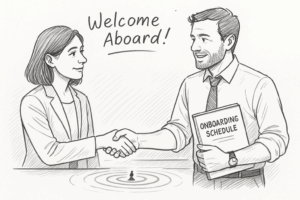

Structured onboarding.

6. Onboarding and Success Planning

Getting someone in the door is just the start.

We’re strong believers in:

  • clear expectations
  • structured onboarding
  • and well-designed first 90-day plans

We also check in because what matters to you, matters to us – and ultimatel long-term success is the goal – for both organisation and individual.


Common Pitfalls (and How We Help Avoid Them)

We’ve seen a few patterns over the years. Here are some watch-outs:

  • Rushing the brief – Taking shortcuts early usually leads to regrets later. Whilst we move at pace, we are considered and slow things down enough to get clarity before moving into the market with agility.

  • Over-valuing familiarity – Just because someone looks like the last great leader doesn’t mean they’re right for what’s next. We help you stay future-focused.

  • Ignoring internal potential – We’ll always ask: is there someone in your team with the right attributes? And if not, why not? What will you do next time to create succession for next time?

  • Forgetting about cultural fit – We assess for alignment as well as capability. Values alignment is essential.

  • Making an offer and hoping for the best – We support both sides through the offer and counter-offer stage with full transparency ensuring the best outcome for all.

Why choose Bishop?

Why Choose Bishop?

We’re a small firm by design. That means every search we take on gets senior-level attention – from first meeting to final appointment. We don’t hide behind slick marketing or inflated promises.

We:

  • We listen first. Properly.

  • Represent your story and protect your brand with care

  • Provide honest, human feedback to all parties

  • Keep every candidate experience positive (even if they’re not selected)

  • Work with kindness, collaboration and quality at the heart of everything

We’ve spent years building long-term relationships, not just with our clients but with the leaders we place. Many become clients themselves. That’s generally a good sign – and how you know it works!

Let's Talk!

Let’s Talk

If you’re about to make a leadership hire, it’s worth getting it right. The cost of getting it wrong rarely shows up immediately but it always shows up eventually. The team at Bishop are happy to chat about how we can add genuine value. No obligation, no pressure, just a practical discusson about what you need and how we might genuinely help.

Visit bishopassociates.co.nz or call us for a confidential kōrero.

👤 About the Author

Rob Bishop is the Director of Bishop Associates, a Christchurch-based Executive Search, Human Resource and Recruitment Consultancy known for its values-driven, people-first approach. With over 25 years’ experience in recruitment, leadership assessment and governance advisory, Rob and his team work closely with boards and leaders to support CEO appointments, executive alignment and long-term organisational success.


Posted in Uncategorized

The Weight of Everyday Life

Thursday, May 15th, 2025

Real Life Isn’t a Highlight Reel

And That’s Okay.

Lately, I’ve been noticing something — in conversations, emails, pauses between meetings. Many people are quietly doing it tough.

Not in dramatic, headline-worthy ways. More like a slow erosion. A kind of emotional wear and tear. A death by a thousand small cuts.

Work stress. Rising costs. Health worries. Political unease. Uncertainty about the future. Add in everyday disappointments — missed sleep, a hard conversation, a child struggling at school, a nagging sense of not being “enough” — and the load adds up.

And yet, so often, this is carried in silence.


The Social Media Mirage

What makes this quiet struggle harder is the contrast we’re constantly exposed to.

On social media, we see the best bits of people’s lives — sunsets, stylish homes, overseas adventures, smiling faces. It looks effortless. Glossy. Happy.

I often remind my kids that ‘comparison is the thief of happiness’, and that much of what they’re seeing is a highlight reel, not a documentary. But even when we know this, it’s hard not to internalise the message:

Everyone else seems to be thriving. So if I’m not… maybe I’m doing something wrong.


A Personal (and Slightly Tragic!) Reflection

It would be remiss of me to talk about comparison without confessing my own somewhat awkward position in the glamour stakes.

Scrolling through social media, I’m often met with sun-kissed influencers and impossibly symmetrical humans doing yoga on paddleboards. And then I catch sight of myself in the mirror, usually mid-yawn, holding a piece of toast, wondering when exactly my eyebrows started migrating in opposite directions.

I think I probably peaked in my early twenties — for about three days! There was a brief moment, possibly around 1994, where I thought, you know what, I don’t look too bad today. It didn’t last. That moment has since been eclipsed by decades of awkward angles, thinning hair, and the sudden appearance of body parts I don’t remember ordering.

And yet here I am. Still loved. Still showing up. Still good enough.


A Death by a Thousand Small Cuts

This isn’t about one big crisis. It’s about the slow accumulation of small things.

A difficult email. A child’s tantrum. A missed opportunity. A dent in the car. An awkward conversation. A power bill. A tightening chest at 2 a.m.

Alone, each one is manageable. But they don’t always happen alone. They stack. They echo. They wear you down.

And still, we often smile and say, “I’m fine.”


The Wisdom of Pooh and Piglet

There’s a passage I’ve always loved from A.A. Milne’s Winnie the Pooh:

Today was a Difficult Day,” said Pooh.

There was a pause.

Do you want to talk about it?” asked Piglet.

No,” said Pooh after a bit. “No, I don’t think I do.”

That’s okay,” said Piglet, and he came and sat beside his friend.”

What are you doing?” asked Pooh.

Nothing, really,” said Piglet. “Only, I know what Difficult Days are like… But goodness, Difficult Days are so much easier when you know you’ve got someone there for you. And I’ll always be here for you, Pooh.”

Sometimes, that’s what we need most — not advice or inspiration. Just someone who’ll sit beside us quietly, even when there are no words.

Winnie the Pooh Illustration.

A.A. Milne


Embracing the Struggle

This isn’t one of those posts with five tips for instant wellbeing. I’m not here to tell you how to fix things. Sometimes things can’t be fixed in a tidy way.

This is just a moment of recognition — that struggling doesn’t mean you’re failing. That feeling overwhelmed isn’t a sign of weakness. That you’re not broken because you’re finding life hard.

You’re living a real life. Messy. Complicated. Entirely human.


A Gentle Path Forward

If today is a Difficult Day, here’s your Piglet moment — a quiet voice saying:

“You’re not alone. I’ll sit here with you.”

Don’t underestimate the strength it takes to keep going, especially when things feel heavy.

Hope doesn’t always come as a burst of motivation. Sometimes it’s just a soft voice saying: Tomorrow, we try again.

Until then, be gentle with yourself and keep going, it’s worth it.


Final Thought

If this resonated with you, maybe pass it on to someone who could use a little Piglet in their day.

You don’t need to fix the world. Sometimes just letting someone know you’re there is enough.

__________

Rob Bishop is the Director of Bishop Associates, a Christchurch-based recruitment and HR consultancy known for its values-led approach and deep commitment to people. With a background in psychology and psychotherapy, Rob brings a thoughtful, human lens to leadership, wellbeing, and workplace culture. He writes occasionally about the mess and magic of being human — often with a touch of humour, always with heart.

rob@bishopassociates.co.nz | +64 3 2650 666

Posted in Uncategorized

Learning to Float

Wednesday, April 9th, 2025

The Self-Help Journey (That Wasn’t in the Plan!)

Most of us don’t start out on a self-development journey with a clear map in hand.

More often, we find ourselves drifting into it sideways — prompted by some quiet internal nudge, a difficult moment, or a sense that something inside us is asking for change.

We think we’re buying a “steamboat” — something with power, direction and purpose — but instead, we find ourselves on a leaky raft called personal growth, bailing water with one hand and Googling answers with the other.

In truth, human development is rarely neat or linear. We like to imagine it as a staircase: each step a course, a breakthrough, a better habit. But in my experience, it feels more like learning to float in unpredictable weather. One day you’re calm and confident; the next, you’re tipped sideways by a passing comment or some old fear you thought you’d long outgrown.

From Siddhartha to Sarcasm: What’s Actually Helped

I’ve spent a fair bit of time reflecting on this over the years.

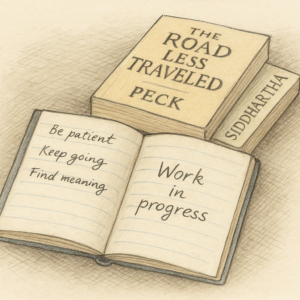
Some of the books I encountered in my teens—The Road Less Travelled, Siddhartha, Brave New World—gave me a language for that search, even if I didn’t always know how to apply it. Later, I dipped into frameworks, theories, and modern approaches to self-awareness and leadership. Some helped. Some didn’t. Most made more sense in hindsight than in the moment.

What I’ve come to believe is this: true development is less about fixing ourselves and more about learning how to be with ourselves. To stay afloat, even when the sea is uncertain. To be curious, not just competent. And to know the difference between a life raft and a real sense of direction.

Books that meant something

Meaningful self-development books

The Poem That Floated Up

Those that know me well know I occasionally write, mostly overly dark and pessimistic poetry! This one is a little lighter so potentially okay to share without causing any psychological harm to anyone! It came from that place of reflection – a slightly bewildered take on self-esteem, self-help, and all the awkward beauty of becoming a more whole version of oneself.

It’s funny because it’s true!

And it’s a little tender because, like many of us, I’m still learning how to sail this thing…

If you’ve ever found yourself spinning in circles, second-guessing your progress, or rolling your eyes at the latest “life hack” while secretly hoping it works – this one’s for you:

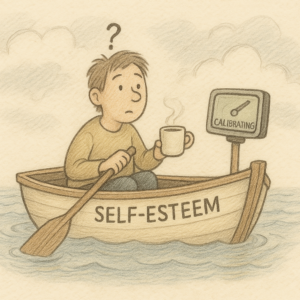
I Bought Myself A Steam Boat

I bought my self-esteem boat,
A typo, really, truth be told.
I meant to get a simple skiff but
They said this one was good as gold.

She came with sails of “Yes, You Can!”
The deck stamped simply “Learn to Thrive.”
The manual read “Be Love, Be Man”,
And I guess at least I tried.

She floated fine when I tested fate,
Though slightly tilted to the side.
I told myself, “You’re doing great,”
While Googling, ‘How do boats decide?’

The sea was deep with aging doubts,
And waves kept asking, “Who are you?”
I answered with a nervous shrug,
The self-reflecting thing to do.

The deck was cluttered with history,
Childhood fears, half-done plans,
A tatty box of Impostor Thoughts
And dreams I never quite began.

She rocked with every passing doubt,
Each breath of feedback less secure,
And though I tried to steer with clout,
Sarcasm patched a broken oar.

I tried affirmations to the stars,
But stars are cold and don’t reply.
I offered them my “growth mindset”,
They sent me back a silent sky.

Still on I navigate churning drink,
Patched-up hopes and half a map,
Becoming quite adept, I think,
At blaming all the usual crap.

Some days she glides. Some days she spins.
Some days I can barely raise my mast.
But here I am, afloat enough,
Not drowning but nor evolving…fast.

So if you spot me from the shore,
Still bailing doubts to stay afloat.
Just know I never hid my flaws,
I only meant to buy a boat.

Calibrating self-esteem!

And Now, Over to You

So here’s a question:
What have you found actually helpful in your own journey of self-understanding or growth?

Was there a book, idea, person, or even a mistake that shaped you in some lasting way?

I’d love to hear what helped you stay afloat.

__________

Rob Bishop is the Director of Bishop, Executive Search Consultant and apparently occasional poet!

rob@bishopassociates.co.nz | +64 3 2650 666

Posted in Uncategorized

Latest News & Insights